

AI AND THE NEW AGE OF INNOVATION
Artificial Intelligence is changing the way companies innovate. For decades, the process of creating a new product, launching a business or bringing a new idea to market required significant investment, specialist teams and months or even years of development. Today, AI is already helping to change these rules.
A recent article from the World Economic Forum highlights how Artificial Intelligence is transforming early-stage innovation reshaping how new venture are conceived, funded and launched. The result is the emergence of a new generation of start-up: leaner, faster and increasingly ambitious in the scale of the problems they are seeking to solve. AI is becoming a powerful partner in the creative process, helping individuals and organisations explore ideas, analyse information and develop solutions at unprecedented speed.
The future will belong not only to those who use AI, but to those who use it creatively.
WHY THIS MATTERS
For start-ups, time and capital have traditionally been among the greatest constraints. AI is beginning to change this equation.
According to the World Economic Forum, development that once required months and significant investment can, in some cases, now be achieved in days. The costs associated with product development, recruitment and entering new markets are also changing, allowing early-stage companies to move faster and operate with greater efficiency.
This creates extraordinary opportunities, but also new challenges. As access to AI tools becomes increasingly widespread, simply using AI will not be enough to create a competitive advantage.
Where start-up success once depended on capital, talent and timing, it is now increasingly shaped by access to data, speed of execution and the ability to integrate into existing ecosystems. The result is a more dynamic, more interconnected and more accelerated innovation landscape.
WORLD ECONOMIC FORUM
The businesses of the future will need original ideas, strong proprietary data, speed of execution and the ability to build meaningful partnerships and connect with the right ecosystems.
THE HUMAN ADVANTAGE
While AI can process information and generate solutions at remarkable speed, innovation remains a profoundly human activity.
Creativity, vision, empathy and the ability to understand human needs continue to be essential. Technology can accelerate the development of an idea, but people still provide its purpose and direction.
The World Economic Forum article highlights start-ups using AI to address challenges ranging from water conservation and environmental monitoring to smarter buildings, financial resilience and the circular economy.
These examples demonstrate something important: the value of AI is not simply in the technology itself, but in how intelligently and creatively it is applied to real-world problems.
BUILDING THE ECOSYSTEM OF TOMORROW
Innovation does not happen in isolation.
As the World Economic Forum highlights, success in this new environment increasingly depends on how quickly a start-up can reach customers, connect with existing ecosystems and build the right strategic partnerships.
Technology can help identify opportunities and accelerate development, but human judgement, context and trust remain essential. The strongest innovation ecosystems will be those that successfully combine the speed and reach of AI with human experience, knowledge and relationships.
THE ROLE OF ECOSYSTEMS:
Nothing occurs in isolation. Platforms such as UpLink, the World Economic Forum’s tool for early-stage innovation, are also evolving due to AI. Leveraging this technology to survey the global innovation landscape, pinpoint high-impact solutions capable of transforming markets and industries, and analyse opportunities at a scale that was not feasible in 2020 when UpLink was launched.
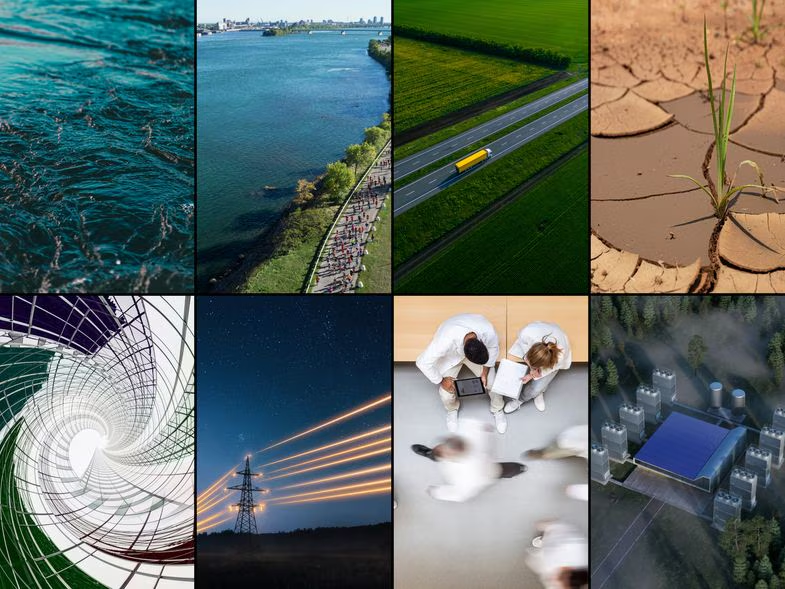
UPLINK. Image credit: World Economic Forum
LOOKING TO THE FUTURE
At Living Our Future, we have long explored the relationship between design, technology and innovation. Artificial Intelligence is not replacing innovation; it is accelerating it.
For entrepreneurs and start-ups in particular, AI is opening opportunities that would have required far greater resources only a few years ago. But lower barriers to entry also mean greater competition and a growing need for ideas that are genuinely distinctive.
The opportunity for individuals, businesses and educators is to embrace these new tools while continuing to develop the uniquely human qualities that drive meaningful progress.
The future will belong not only to those who use AI, but to those who use it creatively, responsibly and with a clear vision of how innovation can improve our world.
Source:
World Economic Forum — “How AI Is Rewriting the Rules of Early-Stage Innovation”